


Dimensions, comfort, finishes, bespoke options and delivery: what to establish before confirming a significant order.
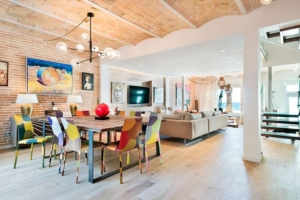
Buying high-end furniture online is quite different from ordering a standard item held in a warehouse. A large modular sofa, a dining table with a marble or ceramic top, a generously proportioned bed or an outdoor lounge suite will often be made specifically for the client, in the chosen configuration. Between first seeing an image on screen and welcoming the finished piece into the property lies a carefully managed process of decisions, checks and responsibilities.
It is entirely reasonable to approach that process with a degree of caution. When purchasing for the first time from a company known only online, clients naturally ask whether the seller is trustworthy, whether the colour will look as expected, whether an untested seat will be genuinely comfortable, and whether a substantial piece will pass through the doors, staircases and corridors.
These concerns should not be brushed aside with reassuring slogans. They deserve clear, verifiable answers.
This guide draws on Italy Dream Design’s daily experience of supplying high-end Italian furniture remotely. Since 2009, we have worked primarily with private clients in France, Italy, Germany and Switzerland, as well as, less frequently, with clients across all five continents. From a single statement piece to a more comprehensive scheme for a home, office or outdoor setting, every order requires a level of care proportionate to the project and to the client’s expectations.
Our purpose is not to persuade everyone to buy. It is to help each client establish whether the piece they admire is genuinely right for them, and to define every relevant detail before production begins.
When an order is worth thousands or tens of thousands of euros, the first question is not about colour or dimensions. It is about the identity of the business taking responsibility for the transaction.
An attractive website and polished photography are not enough. Before placing a significant order, check that the online retailer is operated by an identifiable company with accessible corporate and tax details, a registered address, reliable contact information and clear contractual terms. The quotation should likewise identify the seller and set out the products, selected options, price, payment arrangements and delivery service.
Italy Dream Design is the trading name used by Kallisté Srl, a company incorporated in Florence in 2009. Full company details and the provisions governing purchases are available in our Terms and Conditions.
Reviews can be helpful, but they should never be treated as the sole measure of credibility. In the high-end furniture market, orders tend to be substantial but naturally less frequent than in mass retail. Some clients also value discretion, while others prefer to delegate the entire purchasing process and have little interest in spending time publishing a review afterwards.
A more meaningful assessment considers the complete picture: the company’s identity and trading history, the quality of the information supplied, the clarity of the quotation, the traceability of payments and, above all, the expertise demonstrated in conversation.
A dependable adviser should not merely confirm that something “can be done”. They should know which questions to ask, recognise the technical limits of a request and consult the manufacturer whenever the answer requires further investigation.
Before discussing shapes and finishes, we seek to understand why the client is buying. A sofa intended for daily relaxation must meet different expectations from seating selected primarily for a formal reception room. A table used every day by a family calls for a different assessment from a sculptural centrepiece placed in a dining room reserved for entertaining.
Previous experience matters too. Which seat felt uncomfortably firm? Which upholstery proved disappointing? What is missing from the current room? Which existing pieces must remain, and what atmosphere should the finished interior convey?
Photographs, dimensions and floor plans are invaluable, but they become meaningful only when considered alongside the client’s habits and aims. A piece can be beautifully designed and impeccably made, yet still be wrong for a particular person or setting.
When that is the case, we would rather advise against the choice, even if it means losing the sale. In the high-end market, a client should confirm an order only when fully informed and completely confident in the decision.
One of the most common mistakes is to compare the dimensions of a piece with the dimensions of the room and assume that, because the former fits inside the latter, the choice must be correct.
It is not enough.
Around a dining table, there must be room to draw back the chairs and to pass behind someone who is seated. In front of a sofa, the coffee table should remain practical without compressing the conversation area. Doors, windows and storage units must continue to open freely. Everyday routes through the room deserve equal attention: a passage that is technically possible can become irritating when used dozens of times a day.
We therefore consider the room dimensions, photographs and floor plan where available, together with the existing furniture and the relationship between occupied and unoccupied space.
Unused space is not necessarily space waiting to be filled. Generosity of space is itself a luxury, and one worth preserving.
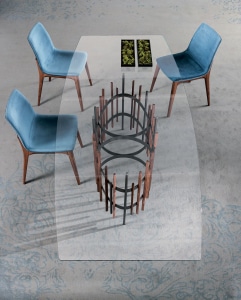
The same consideration applies to the visual effect of materials. Imagine a table with a remarkable sculptural base, surrounded by beautifully designed chairs. An opaque top may conceal the very features that informed the purchase and increase the perceived weight of the composition. Where appropriate, a glass top allows the base and seating to remain visible and gives the room a greater sense of openness.
This is not a universal rule. It is an example of how a seemingly secondary specification can alter the balance of an entire interior.
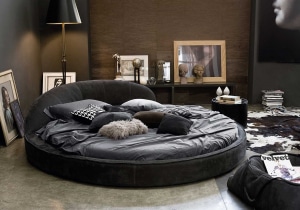
The room itself is only the final stage of the route. Before reaching it, the furniture must enter the property, reach the correct floor and pass through doors, corridors or staircases.
For particularly large pieces, check:
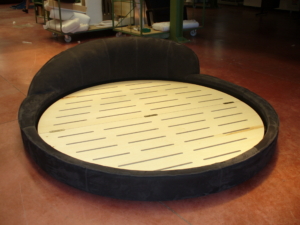
Some access problems can be resolved at the manufacturing stage. The Jazz round bed, for example, is produced with its base in two sections specifically to make a delivery possible that would be considerably more difficult with a single structure. For another project, we arranged for a sofa frame to be modified so that it could pass through the client’s doorways.
More demanding situations may require an external furniture lift or powered access platform of the type used for upper-floor removals. Sometimes the recipient arranges the service; on other occasions, we devise a tailored solution with our transport partners, an option more readily available in major cities.
If the equipment must occupy part of the road, local authority permits and a temporary road closure may be required. Timing then becomes critical: access equipment, delivery team and recipient must all be present at precisely the same time.
These are not matters to discover on the day of delivery.
No description can reproduce an entirely subjective sensation. Used without supporting information, words such as “soft”, “firm” or “enveloping” reveal very little.
To assess a chair, armchair or sofa remotely, begin with measurable details: seat height and depth, overall proportions, frame, suspension and the composition of the cushioning. For most of our sofas, we also provide the density of the polyurethane foam. This figure should not be read in isolation — greater density does not automatically mean a firmer seat — but it helps explain how the cushioning is constructed and how well it should retain its properties.
On certain upholstered models, the layer immediately beneath the covering may be specified in feather or polyurethane. Where a client has a clear preference, we can also ask the manufacturer whether the density can be adjusted accordingly.
The decisive question remains: how will the seating be used? A sofa intended for daily comfort and relaxation requires a different response from an upholstered piece chosen mainly for visual impact or for a room used only occasionally.
The generous modular Insula sofas, with their many possible configurations and upholstery options, demonstrate why a choice cannot be reduced to the number of seats. Proportion, layout, intended use and the desired feel must all be considered together.
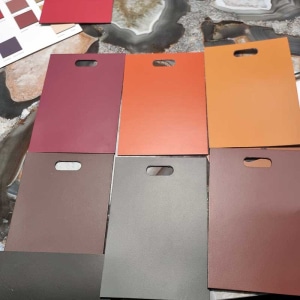
The colour shown on a computer or smartphone depends on the device, its settings and the original photograph. A shade will also change according to natural light, artificial lighting, flooring, wall colour and the surrounding materials.
The issue becomes particularly delicate when a client is trying to match a colour already present in the room. Two browns or two greys that are nearly — but not quite — the same can look like a mistake. When an exact match cannot realistically be achieved, a deliberate contrast is often more elegant than an imperfect resemblance.
Samples provide a more reliable basis for a decision. If a client is committed to the purchase but undecided between two or more colours or coverings, we can send samples after the order has been confirmed and the deposit paid, before production starts. In other circumstances, we may ask for a contribution towards courier charges; that cost will then be deducted from the final order.
Even a sample must be interpreted correctly. Natural materials are not perfectly uniform industrial surfaces.
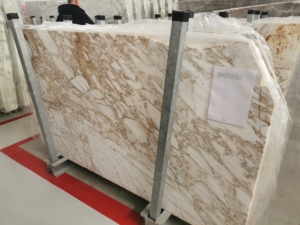
Marble is inherently unpredictable. Veining, clouding and tonal transitions belong to the slab and make every top individual. For particular projects, we can select the slab together with the client and the stonemason, turning the natural character of the material into an agreed choice rather than an unexpected outcome.
Timber also varies. Canaletto walnut, for instance, may appear lighter or darker than an existing piece or than a client remembers from a previous project. A sample helps establish the general colour family and finish, without suggesting that every part of the finished piece will replicate a small fragment exactly.
In high-end furniture, where the design requires it, the continuity of the grain across adjacent elements is generally considered as part of the manufacturing process. Natural variation does not mean abandoning compositional precision.
Some clients hesitate over leather because they believe it will feel hot in summer, cold in winter or be exceptionally delicate. These perceptions often stem from earlier experience with average-quality materials or with very different types of upholstery.
High-quality leather is tactile, durable and capable of becoming more characterful as it ages. It is not indestructible: a zip, a sharp object or forceful abrasion can damage it, just as it can damage a fabric. A resilient covering still needs to be used and maintained appropriately.
In homes with young children or animals likely to scratch or soil the furniture, a removable, washable cover may be the most sensible choice. In some circumstances, it may be wiser to postpone the purchase of a particularly valuable upholstered piece. Honest advice sometimes means recommending restraint.
Colours, leathers, fabrics, finishes and configurations can often be selected from an extensive range. For a number of products, we can also investigate non-standard dimensions at an additional cost. We can readily upholster a sofa or armchair in a fabric already used elsewhere in the client’s interior, creating continuity without insisting on a material from the standard collection.
Every special request is nevertheless referred to the manufacturer. We assess technical feasibility, aesthetic balance and the predictability of the outcome. If significant doubt remains, we prefer not to proceed.
This review can also improve a configuration that appears complete. For one sofa order, the client had chosen the dimensions and covering. Looking at the design as a whole, we realised that the stitching would be enhanced by a contrasting colour. The suggestion was made before production, while a construction detail could still be transformed into a distinctive design feature.
To learn more about one of the most distinctive materials used in Italian furniture, explore our guide to leather in high-end furniture, including its different qualities, care requirements and natural evolution over time.
Before production, every important decision should be recorded in writing. Depending on the product, a comprehensive quotation should specify:
Payment arrangements depend on how the purchase is made. A client who completes an order independently through the website pays 100% of the total at checkout. Where a discussion is opened with our sales team, the client receives, approves and signs a detailed quotation; in this case, we generally propose a 50% deposit when the order is confirmed, with the balance due when the goods are ready.
This is not an instalment plan. Production is conditional upon receipt of the agreed deposit, and dispatch upon payment of the full balance.
Because most items are made specifically to order and many include finishes or configurations chosen by the client, the provisions governing cancellation and withdrawal should be read before signing. The standard right of withdrawal applicable to distance purchases includes exceptions for goods made to the consumer’s specifications or clearly personalised. This is separate from the protections applying to goods that are defective or not as agreed.
The terms governing each individual purchase are those accepted when the order is placed. Full details are available in the Italy Dream Design Terms and Conditions.
In seventeen years of trading, we have never had to handle the return of a piece of furniture simply because a client was dissatisfied or had changed their mind. This is not a claim of infallibility; it reflects, above all, the care devoted to each decision before manufacturing begins.
Once the order is confirmed, we send it to the manufacturer and ensure that it has been entered correctly. We check the estimated production time and request photographs where bespoke work is involved. For export shipments, we also ask for images of the packaging, which must be appropriate for the journey ahead.
At the same time, we appoint the carrier after reviewing cost, feasibility and timing. We monitor collection and the stages of transport through to final delivery, with human operators following the consignment, and update the client whenever a new milestone is reached.
The production time is estimated by the manufacturer and communicated conservatively, taking account of the item’s characteristics and any personalisation. In rare cases, circumstances beyond anyone’s reasonable control may still intervene, including shortages of raw materials or the effects of an international crisis on supply.
The transport time begins when the goods leave the factory. It depends on the route and logistical arrangements and may be affected by traffic disruption, road closures or restrictions that occur more frequently during the summer.
Manufacturing and transport are therefore distinct stages, each with its own timescale. If a delay arises, the seller’s responsibility is to keep the client informed and continue following the matter until it is resolved.
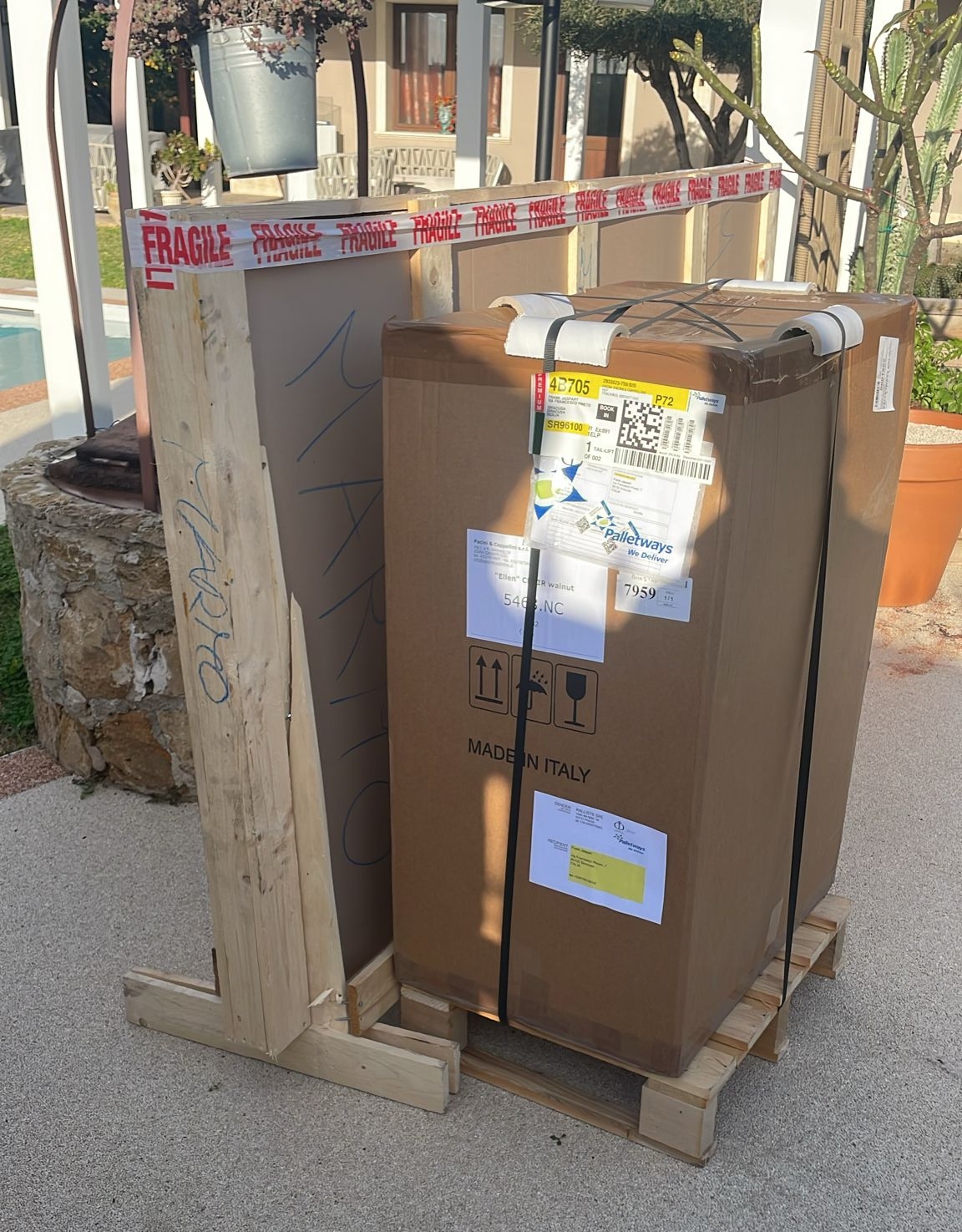
Standard kerbside delivery is free of charge for all orders of €1,000 or more. It is normally made by a large groupage vehicle carrying goods for several clients and staffed by a single driver. The service ends at the point accessible to the vehicle and does not include taking the furniture into the property, carrying it to another floor, assembly, positioning or removal of the packaging.
Where the item or the building requires it, a dedicated service can be arranged. Any service beyond standard kerbside delivery is payable by the recipient. It is defined with the carrier, itemised in a separate quotation and organised only after the client has approved the cost.
Depending on the project, it may include:
Most of our furniture arrives fully assembled. For pieces that require installation, we can explore an appropriate solution with our carriers. The service should not be decided at the last moment: it needs to reflect the weight, volume, access and availability of people on site.
Even when transport is covered by all-risk insurance, the recipient has an essential role. At the time of delivery, the packaging should be inspected with the carrier and, whenever possible, the contents should also be checked.
If a carton is crushed, punctured, wet or shows any other irregularity, the issue should be described on the delivery note and photographed. A precise reservation is more useful than a generic statement. If the packaging cannot be opened immediately, it is prudent to sign subject to further inspection, in accordance with the accepted terms.
Accepting the consignment without any check is not advisable. Equally, damaged packaging does not necessarily mean that the furniture inside is damaged and should not automatically result in refusal of delivery. A written reservation, photographs and inspection of the contents provide the evidence needed to document the event properly.
Under our operating procedure, any damage should be reported by email within 24 hours, accompanied by clear photographs. The recipient should also make sure that we have received the message, by telephone if necessary. The furniture, damaged component and all packaging must be retained until the insurance claim has been concluded.
For the obligations, deadlines and procedures applying to the individual purchase, please refer to our Terms and Conditions.
Careful checks reduce the likelihood of an unexpected problem, but they cannot remove every risk associated with craft production and international transport.
If a manufacturing defect is confirmed, the maker may supply a new component or replace the furniture. In some cases, a repair on site is the more sensible solution. For a minor repair to a piece delivered in Prague, we once flew a technician from Florence to carry out the work.
When damage has occurred in transit, we prepare the documentation for the all-risk insurer and arrange the replacement of the affected part or the entire piece, as appropriate, in line with the outcome of the claim.
It would be irresponsible to suggest that a high-end piece can never present a problem. The difference lies in the quality of the initial checks and in the seller’s presence when a solution is required.
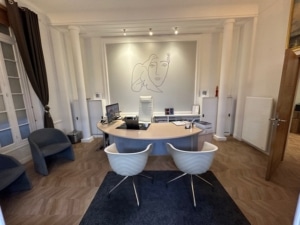
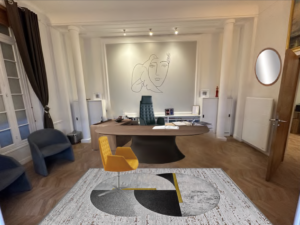
A doctor approached us to replace the desk and seating in his consulting room. Having studied the photographs, we realised that the new pieces, however beautiful, would remain visually isolated and at odds with other elements that no longer reflected the professional image he wished to convey.
We therefore expanded the scheme to include a rug, two bookcases and a round wall mirror. The intention was not to fill the room or add products without purpose. These elements created a connection between the new furniture and the identity of the space as a whole.
The client was delighted. The desk had not simply arrived at its destination; it had found the right setting.
The same principle applies to private homes and outdoor spaces. The finest contemporary outdoor lounge furniture can offer beauty and comfort comparable to an indoor living room, but it must work with the architecture, circulation, light and the way the space is used. An object alone is not a substitute for a considered scheme.
Before signing the quotation, make sure you have confirmed:
If any answer remains vague, pause and clarify it before production begins.
Italy Dream Design does not focus its search on brands available in every furniture shop. We favour rarer, more original and less widely known pieces for clients who want an individual interior rather than a recreation of something seen everywhere.
That exclusivity carries a responsibility: to know the manufacturers and their workshops, understand what can be altered and what is better left unchanged, verify special requests and accompany the client through to delivery.
Buying high-end furniture online can be a calm experience, and even a more considered one than making a rapid decision in a showroom. Clients can view photographs and samples in their own interior, discuss the choice with everyone involved and return to the details without feeling that the purchase must be concluded during a shop visit.
That experience depends on having genuinely available advisers on the other side. We continue our support by telephone and email, often well beyond conventional office hours, because a question about colour, proportion or access cannot be resolved by an automated reply.
Distance should not mean being left alone. It can instead create the time and space for a more relaxed, reassuring decision.
The purchase still requires accurate information, dialogue and time. Before a piece enters production, every significant detail should have been discussed and approved.
The right moment to confirm an order is when the desire for the furniture is matched by complete confidence in its relationship with the space, its everyday purpose and the client’s own way of living.
It can be, provided that the seller is clearly identifiable, publishes verifiable company information and terms, prepares a detailed quotation and records the dimensions, finishes, payment arrangements and delivery service. For a significant order, it is equally important to be able to speak to people who genuinely know the products and manufacturers.
Images displayed on a screen do not always reproduce colours accurately. A shade should be assessed in relation to the light, flooring, walls and existing furnishings. Where available, samples of leather, fabric, timber or other finishes provide a more reliable basis for the decision.
Consider the seat height and depth, frame, suspension, composition and density of the cushioning, together with the intended use. General descriptions such as “soft” or “firm” are not enough: the seller should be able to interpret the technical information in relation to the client’s preferences.
Measuring the room is not enough. Check doorways, corridors, stairs, lifts, landings and turning areas, as well as the packed dimensions of the product. Certain deliveries may require a sectional structure, a dedicated vehicle, additional operatives or an external furniture lift.
The right of withdrawal for distance purchases includes exceptions for goods made to the client’s specifications or clearly personalised. The applicable provisions depend on the product and order, so the Terms and Conditions should be read before confirmation. Withdrawal following a change of mind, warranty rights and non-conformity are separate matters.
The packaging should be inspected with the carrier and, whenever possible, the contents should also be checked. Any irregularity must be described on the delivery note and photographed. If the packages cannot be opened immediately, follow the instructions on reservations contained in the Terms and Conditions. Packaging and damaged parts must be kept until any claim has been concluded.
Have you found a piece but would like to verify its dimensions, finishes, comfort or delivery requirements? Send us photographs, measurements or a floor plan, and we will review every detail with you before the order is placed.
To provide us with useful photographs and measurements without making the process unnecessarily complicated, follow our practical guide to photographing and measuring a room with your smartphone.